





Everest REGION
EVEREST BASE CAMP HELI TREK - 10 DAYS
Created by
HoneyGuide
The Everest Base Camp Heli Trek is a 10-day moderate trek in the Everest region of Nepal reaching 5,644 m. Best seasons: March to june. september to december.
- Duration
- 10 days
- Max altitude
- 5,644 m
- Difficulty
- Moderate
- Best season
- March to june. september to december
Need help planning?
Reach out to our local experts to build your perfect itinerary.
We are featured by
Highlights
- The soulful moment at Gokyo Lakes, the exhilarating thrill of Cho La, and the gram-worthy frame at EBC: all in one single trek!
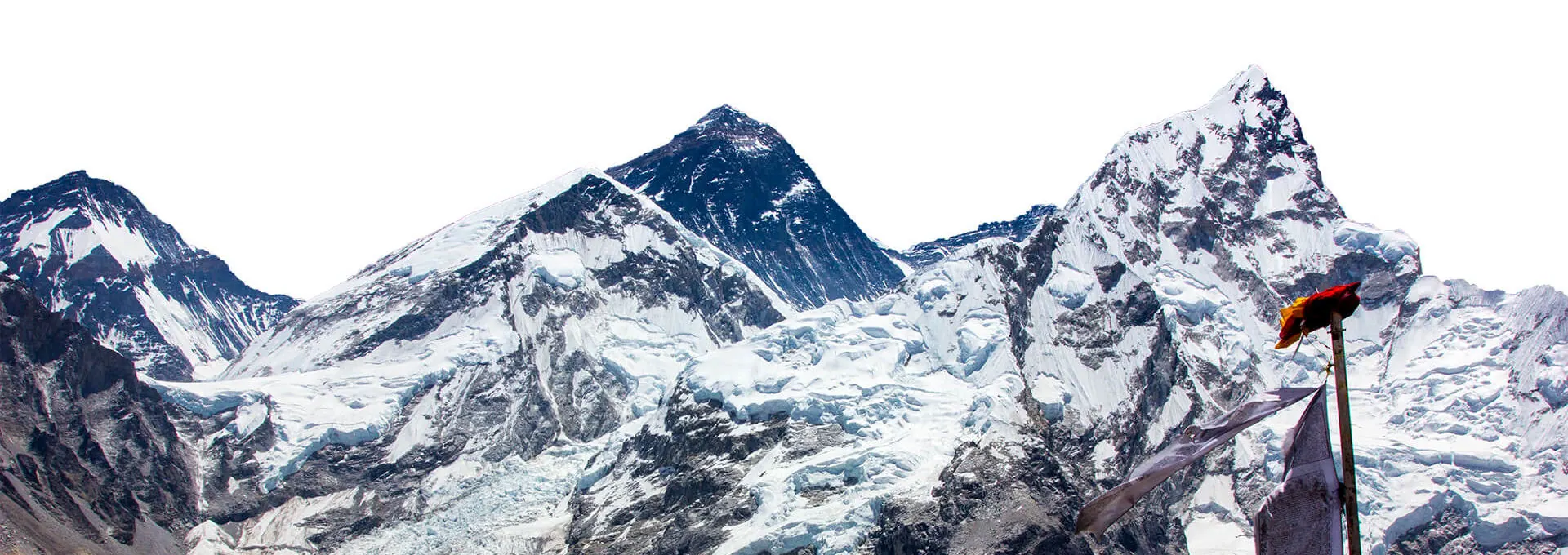
- Take selfies with the giants—Everest, Lhotse, Cho Oyu, and Makalu—from two legendary viewpoints: Gokyo Ri and Kala Patthar.
- Live simply and breathe deeply as you walk past quiet pine-rhododendron forests, turquoise rivers, and rugged alpine meadows.
- Get a chance to spot the majestic Himalayan Tahr, the iridescent Himalayan Monal, and the shy Musk Deer.
- Share a laugh with the Sherpas as you trade tall tales from the mountains-you'll have one of your own once you complete this adventure.
Quick Facts
- Difficulty Level
- Moderate
- Total Length
- 55 Km
- Highest Altitude
- 5,644 Meters
- Start location
- Lukla
- Finish location
- Lukla
- Permits
- Sagarmatha NP Permits, Khumbu Rural Municipality (only for non-nepalis)
- Best Season
- March to june. september to december
This heli trek will give you both a birds-eye view and grounded perspective of the Everest Region. If you are looking for a way to shorten the Everest Base Camp Trek without compromising on safety, then this option is perfect for you.
For the first part of the trek, you will follow the standard Everest Base Camp Trek itinerary. On the ninth day at Gorakshep, a helicopter will pick you up and bring you down to Lukla.
As such, for the first part of the trek, you will slowly walk through mystical coniferous forests, long suspension bridges, hospitable villages and iconic mountain views. If you are lucky you might even catch a glimpse of the iridescent Himalayan Monal, Himalayan Tahr, and the Musk Deer.
And on the last day, you will get a fantastic birds eye view of the entire Everest Region and get to Lukla just on time for a celebratory drink!
WHY HONEYGUIDE?
~ Specialized in Everest - From dropping cyclists at Kala Patthar to classy New Year events, we have done some exciting things in Everest. ~ Travelers’ Choice Award 2022 by Tripadvisor - Also, we only use hotels that are highly rated on Tripadvisor. ~ Understand Everest inside out - Extensive online resources and deep community involvement. ~ Only Online Travel Agency in Nepal- Option to book Treks & Heli Tours / Flights / Hotels / Trekking Guides directly. ~ Love the Mountains and are fun to talk to.
If you have any questions, feel free to Call / WhatsApp / Email OR Fill out an Enquiry Form.
DETAILED ITINERARY
DAY 1: KATHMANDU/RAMECHHAP - LUKLA - MONJO (5-6 hrs)
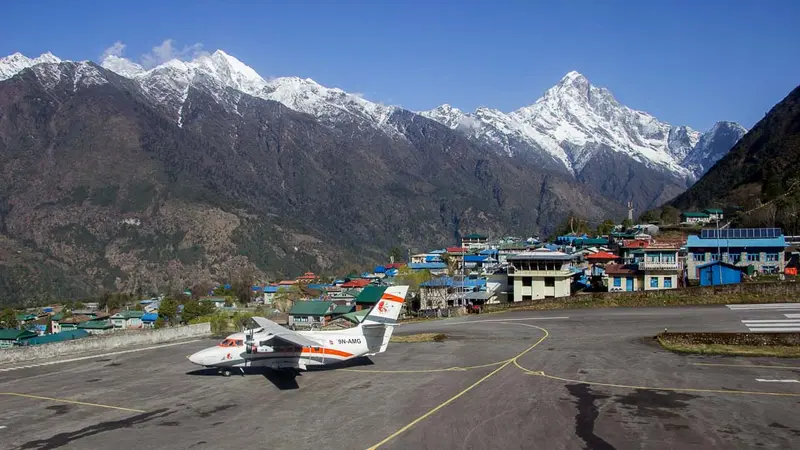 ~ Flight to Lukla (2,850 m).
~ Walk for around 3 hours through villages, forests, and some long-ass bridges to reach Phakding for lunch.
~ Walk for another 3 hours to settle for the night at Monjo (2,820 m).
Accommodation: Mount Kailash Lodge, Monjo or similar.
(Note: If fights take off from Ramechhap, chances are we will spend the first night at Phakding.)
DAY 2: MONJO - NAMCHE BAZAAR (2-3 hrs)
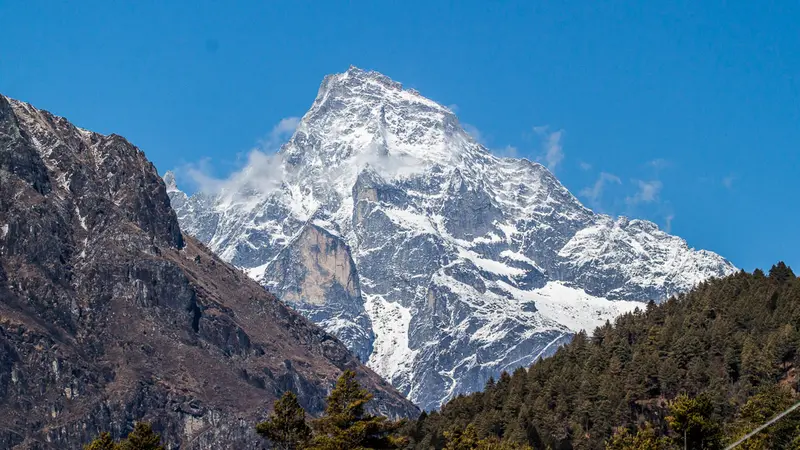 ~ Get your Sagarmatha National Park permits at Jorsalle.
~ Walk uphill for around two to three hours to reach Namche Bazaar (3,640 m).
~ Stroll around Namche and enjoy the sunset from the National Park Viewpoint.
~ Overnight at Namche Bazaar.
Accommodation: Khumbu Lodge / Hotel Namche, Namche Bazaar or similar.
DAY 3: NAMCHE - SYANGBOCHE - KHUMJUNG - NAMCHE (2-3 hrs)
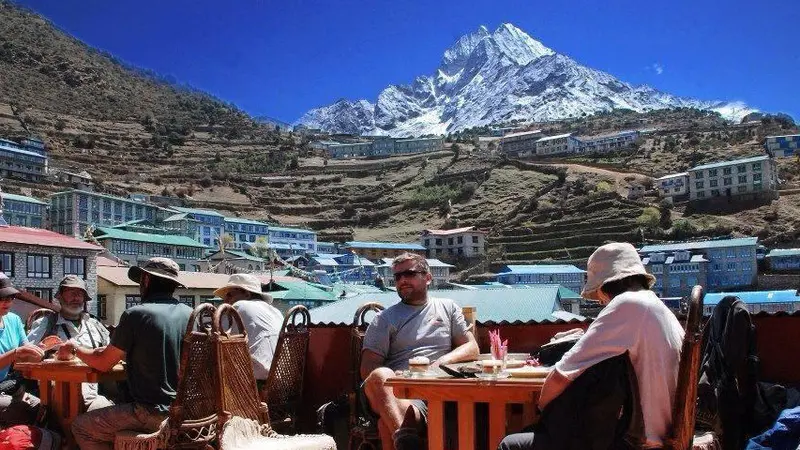 ~ After breakfast at Namche, walk to Hotel Everest View to enjoy amazingly stunning mountain views.
~ Play the grand piano at 3,880 meters.
~ Return to Namche through the twin Sherpa villages of Khumjung and Khunde (2 hours)
~ Overnight at Namche Bazaar.
Accommodation: Khumbu Lodge / Hotel Namche, Namche Bazaar or similar.
DAY 4: NAMCHE - TENGBOCHE - DEBOCHE (6 hrs)
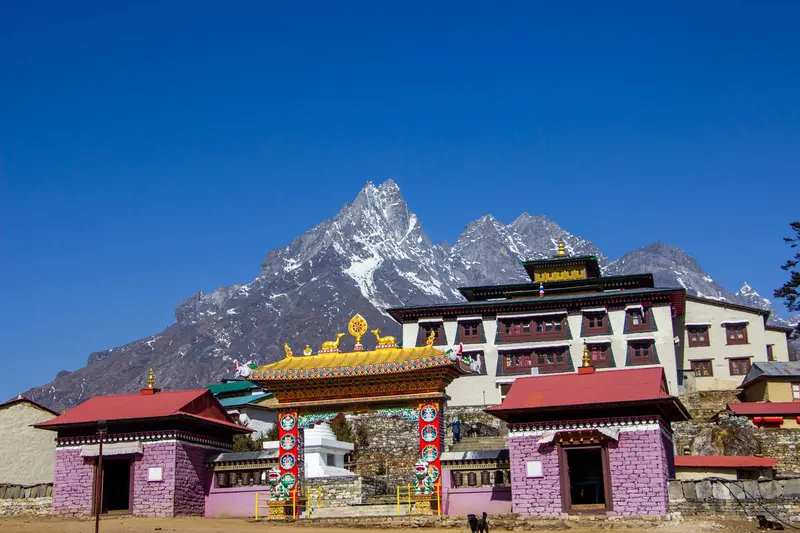 ~ Walk past some beautiful mountain views of Ama Dablam, Thamserku, and Kangtega to reach Phungi Tenga for lunch. (3.5 hours)
~ Watch out for Himalayan Tahr and Himalaya Monals in the first section.
~ Climb up to the famous Tengboche Monastery. (2.5 hours)
~ Settle for the night at the quiet monastic village of Deboche (3,740 m). (20 minutes)
Accommodation: Rivendell Lodge, Deboche or similar.
DAY 5: DEBOCHE - DINGBOCHE (6 hrs)
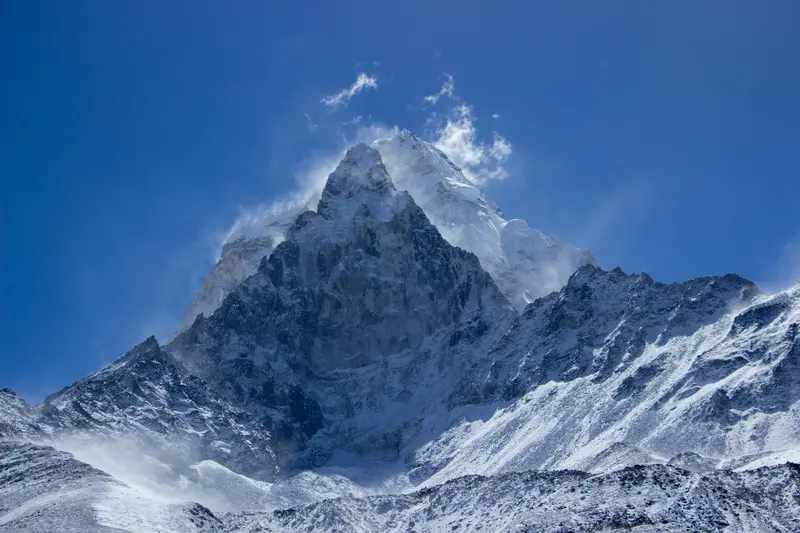 ~ Walk past the village of Pangboche, past the treeline, to have lunch at Syomare. (3 hours)
~ As you settle in for the night at Dingboche (4,340 m) (2.5 hours), make sure to take an oximeter reading and see how you are feeling. Read more about AMS
~ Overnight at Dingboche.
Accommodation: Hotel Bright Star, Dingboche or similar.
DAY 6: DINGBOCHE - CHUKUNG / NANGKARTSANG PEAK (4-5 hrs)
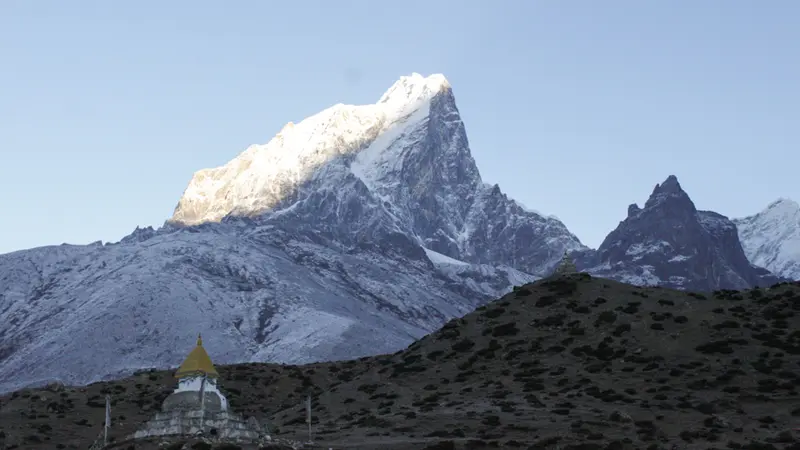 ~ After breakfast, hike to Nangkartshang Peak (5,083 m) and return to Dingboche for lunch. (3-4 hours)
~ Overnight at Dingboche.
Accommodation: Hotel Bright Star, Dingboche or similar.
DAY 7: DINGBOCHE - THUKLA - LOBUCHE (6 hrs)
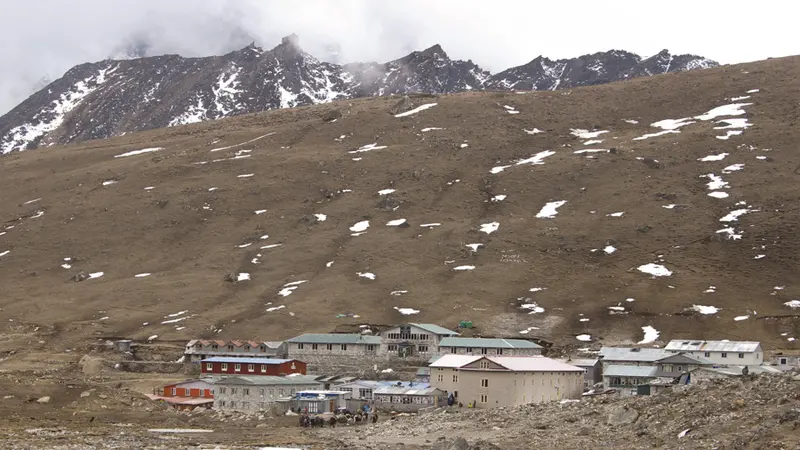 ~ Walk past some amazing mountain sceneries to have lunch at Thukla right at the mouth of the Khumbu Glacier. (3 hours)
~ Settle in for the night at Lobuche (4,930m) (3 hours).
~ This is another spot where you have to take stock of your physical well being with regards to altitude. If you are not feeling too well, talk to your guide or call us. We can help you with the best course of action.
~Overnight at Lobuche.
Accommodation: Oxygen Altitude Home, Lobuche or similar.
DAY 8: LOBUCHE - EBC - GORAKSHEP (6 hrs)
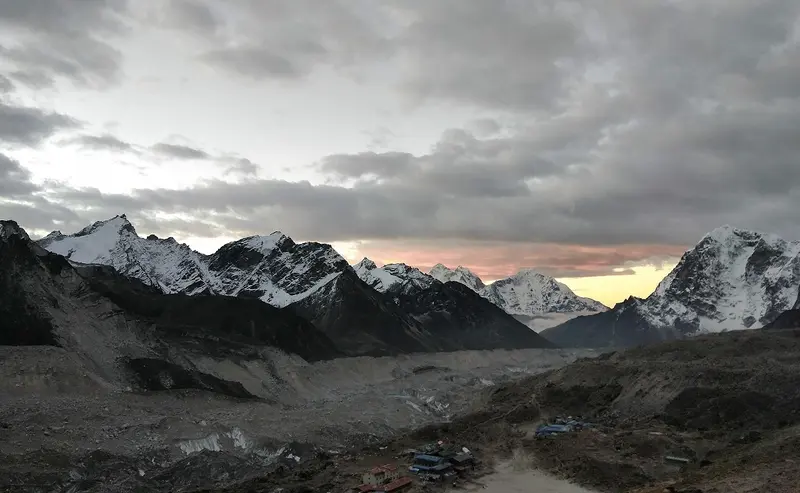 ~ An early start from Lobuche will make sure that you get to Gorakshep (5,170 m) at a good time for lunch. (3 hours)
~ After lunch, walk to Everest Base Camp (5,364 m) and come back to Gorakshep to settle down for the night. (3 hours)
Accommodation: Hotel Everest Inn, Gorakshep or similar.
DAY 9: GORAKSHEP - KALA PATTHAR - LUKLA (2-3 hrs)
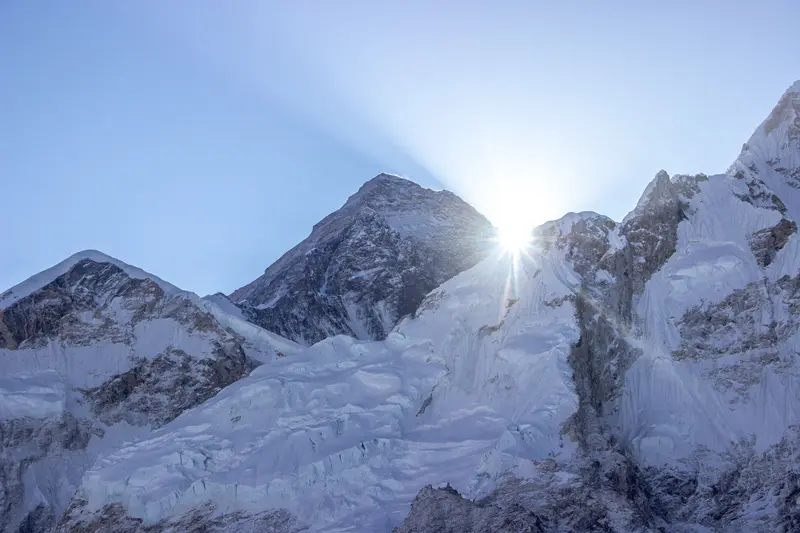 ~You might want to start real early on this day if you want to enjoy the sunrise from Kala Patthar (5,643 m). (3 hours)
~After the hike to Kala Patthar, you come down to Gorakshep for breakfast, pack off, and fly to Lukla.
~Overnight at Lukla.
Accommodation: Khumbu Resort / Himalaya Lodge or similar.
DAY 10: LUKLA - KATHMANDU/RAMECHHAP
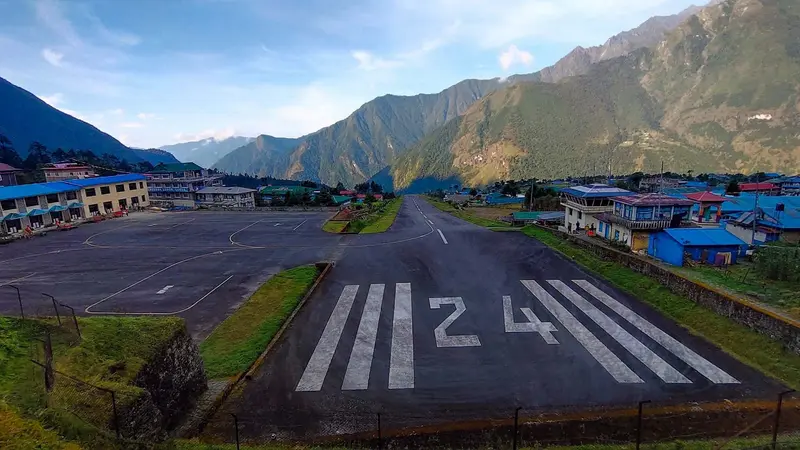 ~Early morning flight from Lukla to Kathmandu/Ramechhap.
CONTACT
If you have any questions, feel free to Call / WhatsApp / Email OR Fill an Enquiry Form.
We will happily tweak this tour to your liking. Some possible changes are: ~ Travel by helicopter between Kathmandu and Lukla - approx. USD 400 per person one way | USD 2,400 per flight. ~ Book rooms with attached bathrooms where possible - approx. USD 10 per night per person. ~ Add hotel and/or city tour in Kathmandu - approx. USD 100 per person. ~ Include meals and hot water - approx. USD 35 per day for three meals + hot water.
INCLUSIONS AND EXCLUSIONS
Includes
~ Airport transfers for international and domestic flights ^ ~ Flights between Kathmandu and Lukla (Ramechhap transport if needed) ~ Helicopter service as mentioned in the itinerary. ~ Certified trekking guide and his/her expenses ~ Porters and their expenses (2 trekkers : 1 porter) ^ ~ Accommodation during the trek on twin sharing basis ~ Meal Plan - Indians: No Meals (EP) | Nepali: All meals (AP) | Others: Breakfast (BB) ~ All government and local permits ~ Medical Kit with Oximeter ~ Hotel in Kathmandu for two nights (only for Indians)
^ not included for Nepali groups.
Add-on Services
~ Duffel Bag: Free with USD 30 deposit | Sleeping Bag: USD 1.5 per day (USD 150 deposit) | Down Jacket: USD 1.5 per day (USD 100 deposit) ~ Direct helicopter shuttle between Kathmandu to Lukla (skip the 5-hour drive to Ramechhap. Learn more.
Excludes
~ International flights ~ Visa fee for Nepal | USD 30-50 | More info. ~ Cost of evacuation and medical support in case of any mishap. ~ Mandatory travel insurance that includes helicopter evacuation More info. ~ Tips for support staff | Porters: USD 4-8 per day | Guide: USD 8-15 per day ~ Personal expenses | Battery charging: USD 4 per hour | Hot drinking water: USD 4 per liter | Bottled water: USD 1-4 per bottle | Hot shower: USD 4 | Wifi Cards: USD 15 for 10GB | Beer: ~USD 7 for 500 ml | Oxygen: USD 30 per hour ~ Cost incurred by changes in the tour due to any reason. ~ Anything else not included in the inclusion list above.
SIMILAR TOURS
Family-friendly alternatives Namche Heli Trek 4N/5D and Hotel Everest View Heli Trek 5N/6D are both excellent family-friendly alternatives that involve walking only up to Namche and then taking a helicopter to Kala Patthar to see Mount Everest up close.
EVEREST PLANNING RESOURCES
SAFETY FIRST Nepal Visa and Safety Update / Pre-existing Conditions / Altitude Illnesses / Water Safety / Heli Safety Briefing / Insurance / Detailed Health and Safety Post
FIND YOUR PERFECT TOUR Short Treks / Heli Tours / Heli Treks / Ways to See Everest / All Tours
BEST TIME TO GO Best time for EBC | EBC in Jan / Feb / Mar / Apr / May / Jun / Jul / Aug / Sep / Oct / Nov / Dec
PLANNING ESSENTIALS Expectation vs Reality / Cost in USD, INR & NPR / Difficulty / Training / Packing List / Maps / Permits / Side Trips / Solo Treks / Independent Treks / For Women
FLIGHTS TO LUKLA Online Flight Booking / Getting to Lukla / Lukla Weather and Flights / Survival Guide / Alternatives / Lukla Airport / Getting to Ramechhap / Ramechhap Flights
HOTELS IN EVEREST Online Hotel Booking / Overview / Hotels in Lukla / Namche / Dingboche / Lobuche / Gorakshep / Gokyo
TREKKING GUIDES FOR EVEREST Trekking Guides from Lukla / from Kathmandu / How to hire a guide?
WHAT TO EXPECT Hotels in Everest / WiFi, Mobile Network, Electricity / Food and Drinks / Sherpa Food / For Vegans
CULTURE Epic Photo ops / Sherpa Names / Khumbila / 5 Secrets / Festivals / Tengboche Monastery /
NATURE Mount Everest / Everest Base Camp / Everest Viewpoints / Kala Patthar / Ama Dablam / Mount Mera / Mountains / Birds / Wildlife / Flowers / Lakes /
VILLAGE DETAILS Lukla / Phakding / Monjo / Namche / Tengboche / Deboche / Pangboche / Dingboche / Pheriche / Thukla / Lobuche / Gorakshep / Dzongla / Gokyo / Thame / All Villages
IMPORTANT NOTE Any flight in the high mountains is weather dependent and the captain of your helicopter has the last word on what is safe and what is not, regardless of what is mentioned in the tour outline. Any additional cost incurred due to weather disruptions will be the responsibility of the traveler.
FAQS
Traveling to the mountains poses some inherent risks. As such, the best strategy is to prepare for the worst and then hope for the best.
PRE-EXISTING CONDITIONS
The first thing to keep in mind is to see if you have pre-existing conditions that could cause complications at high altitudes. Specifically, suppose you have sickle cell disease, pulmonary hypertension, obesity hypoventilation syndrome, or congenital heart problems. In that case, we highly recommend you consult with a qualified physician before planning a trip to the mountains.
ALTITUDE-ILLNESS
Given the low amount of oxygen at high altitudes, a sensible ascent is essential to give your body the time to acclimate to the thin air. Failure to do so can lead to your lungs or brain filling up with water leading to death in some cases. The key is not to climb more than 500 meters in one day once you pass the 2,500 meters mark.
ENVIRONMENTAL HAZARDS
Given the extreme weather in the high mountains, proper gear and regimen must have a safe and comfortable tour. The three most important things that you have to prepare for are cold, snow, and radiation. As such, invest in the right sunglasses, sunscreen, boots, and clothing.
TRAVEL INSURANCE
We highly recommend everyone get travel insurance covering high altitude evacuation before leaving on a trek to the high mountains. Global Rescue and World Nomads are both highly recommended. For Nepali travelers, please note that insurance that covers helicopter rescue is not available as of now. As such, please be careful while planning your tour and only work with companies that can provide timely evacuation service if needed.
RESCUE AND EMERGENCY
As health facilities are limited in the mountains, a helicopter's evacuation is usually the only option during an emergency. As such, the right insurance provider is essential. If you are not buying insurance for some reason, please ensure that there is someone in Kathmandu who can coordinate payments for a helicopter rescue. If you still have questions, please feel free to call or email us.
HOW DO I MAKE A PAYMENT?
To confirm your tour, you will have to make complete payment either through one of your integrated payment gateways or transfer the funds to our bank accounts.
For Nepali citizens:
Account Name: HoneyGuide Pvt. Ltd.
Beneficiary Bank: Himalayan Bank, Patan Branch
Account Number: 00606903770018
For USD transfers:
Account Name: HoneyGuide Apps, Inc.
Bank Name: Silicon Valley Bank
Account Number: 3302225311
Swift Code: SVBKUS6S
ABA Routing Number: 121140399
BOOKING A TOUR
- Deposit Required for Reservation: 50 percent of total tour cost
- Deadline for Full Payment: 2 weeks before the tour begins
CHANGING A TOUR
- Two weeks before tour date: No extra charge
- 1 to 2 weeks before tour date: 10% additional charge
- Two days to 1 week between tour date: 20% additional charge
- Within two days of tour date: Above 30% (variable)
CANCELLING A TOUR
- Two weeks before tour date: No charge (transaction charges may apply)
- One to two weeks before tour date: 20% Cancellation Charge
- Two days to one week between tour date: 50% Cancellation Charge
- Within two days of tour date: No Refund
DELAYS AND CHANGES DURING THE TOUR
In case of flight delays/cancellations due to bad weather or unforeseen circumstances, HoneyGuide will change the dates at no additional costs. However, any extra cost incurred, including but not limited to accommodation and food, will be the responsibility of the traveler.
In case of changes due to the trekker's health issues, HoneyGuide will make all the changes without any additional cost. However, any extra charge because of the changes will be the responsibility of the traveler.
While Nepal's mountains see six seasons, the best period to go to the mountains is from March-May and September-December. However, every season has its quirk, just like people.
January/February (Winter)
Good time for trekkers willing to brave the cold and snow for empty trails, fantastic mountain views, and wildlife sightings.
March/April (Spring)
Offers a little bit of everything: mountain views, warm weather, flowers, a bit of crowd, and a whole lot of fun.
May/June (Summer)
Best time for those into nature. Flowers are blooming and bird activity is fantastic. Mornings are still clear before monsoon starts.
July/August (Monsoon)
Only for hardcore trekkers willing to put up with the elements for an authentic cultural experience and high altitude flowers.
September/October (Fall)
Everyone's darling. The mountain views are something to write home about, and the temperature is just perfect.
November/December (Pre-Winter)
Driest two months in the calendar. It gets a bit nippy during mornings and evenings, but manageable with lots of sunshine.
The difficult thing with gear is to make sure you have enough without carrying too much. Whether you are walking or taking the helicopter, the most important thing is to layer up. As such inner thermals, shirts, fleece, a down jacket, and trousers are essential. A warm hat and a buff are beneficial. As for shoes, feel free to make your pick depending on the weather and altitude. Given the amount of UV up there, good sunscreen and sunglasses are also essential.