Himalayas 2.0 - Everest Edition
As a part of Himalayas 2.0, HoneyGuide recently partnered with hoteliers and lawmakers of the Everest Region to explore how digital technology can be used to address several issues in the region.
HoneyGuide StaffPublished 3 min read
Being the land of the Himalayas, Nepal has a distinct competitive advantage over all other countries in mountain tourism. Despite such immense potential, even Everest Base Camp Trek sees an insignificant number of trekkers every year. While increasing the number of trekkers is just one part of the issue, other important issues yet to be addressed are - managing the flow of trekkers, assuring trekker safety, and increasing tourism dividends for the local community.
As a part of Himalayas 2.0, HoneyGuide recently partnered with hoteliers and lawmakers of the Everest Region to explore how digital technology can be used to address these issues. Specifically, here are some of the works that have been done to date to bring mountain tourism in Everest into the digital age:
Trekking In Nepal Mobile App#
This app, which has been downloaded over thirty thousand times, is a one-stop place to find all the information on Everest, from lodge phone numbers to mountain names to flowers to festivals and everything else in between. All of this information is always available online. (Download: iOS and Android)
The idea is to provide information transparently so that trekkers not only feel reassured to undertake a trek but also actually understand and appreciate the land and people.
Online Booking for Lodges, Guides, and Flights#
HoneyGuide has also started online bookings for flights to Lukla, 100+ lodges in the Everest Region, and Guides. Given that HoneyGuide directly connects trekkers to service providers, it was very well received by both parties.
We were also able to fly around half of the trekkers in Everest directly from/to Kathmandu even when most of the flights to Lukla were rerouted to Manthali, Ramechhap.
The whole idea behind directly connecting service providers with trekkers is to make sure that prices go down for the trekker while at the same time income goes up for the service provider. And that is exactly how tourism scales.
Hive- Lodge Property Management System#
HoneyGuide also made it really easy for lodges to showcase their properties online, manage bookings, and communicate with trekkers through the Hive App.
If you wish to list your lodge or homestay in HoneyGuide, please download Hive and start the process.
Digitizing Room Price Collection#
Everest is one of the few trekking regions in Nepal that has started collecting room prices. While charging for room is standard practice all over the world, trekking regions in Nepal are only recently realizing this simple fact.
HoneyGuide facilitated the process of collecting room prices in the Everest Region by introducing Android POS Machine for billing and sales management.
If you are any kind of organization, local government, or local business looking to promote your destination, please feel free to reach out to Ashish on how we can collaborate:
Email us : honeyhunter@honeyguideapps.com
Or Call: +977-9808949168
Learn more about Himalayas 2.0 Campaign here.
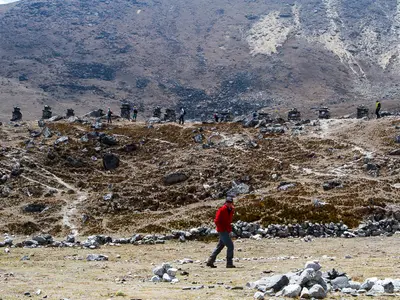
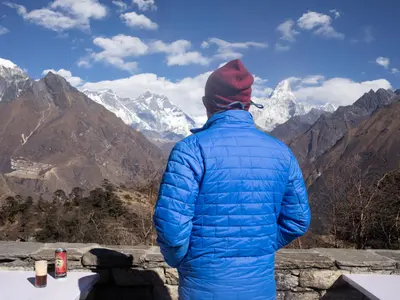
Here are some of the images from HoneyGuide's Trip to Everest region as a part of Himalayas 2.0 .
OTHER INTERESTING PROJECTS IN EVEREST REGION#
While these are projects in which HoneyGuide is directly involved, there are a lot of other projects that aim to bring in more trekkers in the Everest Region while at the same time manage this flow.
Road To Kharikhola#
The road has reached Kharikhola, a village 20km or good days walk from Lukla. And it is set to reach Lukla next year. Public transport has already started between Kathmandu and Kharikhola.
Local Permits#
Everest was the first and so far the only trekking region in Nepal to scrap the TIMS permit and replace it with a local permit. This move has made sure that all the funds collected from the permit goes into local development projects.
Digitizing Visitor Entry#
Better planning starts with better data. Sagarmatha National Park is digitizing visitor entry with passport readable machines. This data will not only come in handy for planning but will also be crucial during times for crisis management too.
Trekker Safety System#
Mahabir Pun started a pilot project to introduce a device that had the potential to bring the number of missing trekkers in Nepal to zero. While, he was not able to implement that project in the Annapurna, talks are underway to implement it in the Everest Region.
Low Season Pricing#
Preparations are also underway to introduce different pricing for the high season and low season which will help spread flow of traffic throughout the year. Add this to the fact that
Introduction of Ozonated Drinking Water#
Pilot test is also underway at Pheriche to introduce ozonated drinking water in place of bottled water. This will not just reduce the use of plastic bottles, but also of firewood/kerosene/LPG.
About the author
Written by
HoneyGuide Staff
HoneyGuide is a Nepal-based trekking company. These posts are written by the guides and trip planners who work the routes they describe — mostly in the Everest region — and are updated as trails, permits and lodges change.
All posts by HoneyGuideReady to go? Compare all our Everest treks & prices
Continue planning your Everest trek
Where to Stay in Kathmandu Before an Everest Trek
If you are taking the 1 am shuttle to Ramechhap, stay in Thamel or Lazimpat a short walk north. If you are flying by helicopter or sleeping in Manthali, choose on logistics and air. Three things about the trek decide this before price or atmosphere does.
How to get to Everest Base Camp? Putting together a day-by-day itinerary.
Take a base itinerary and test every day against four things: how much higher you sleep, how far you walk, how you fly, and, if it matters to you, where you sleep. Change anything that doesn’t fit your requirements.
What is HoneyGuide's approach to safety on an Everest trek?
HoneyGuide's approach to safety is to settle most of the risk before you even reach the trail, then run the trail based on data and written protocols. A guided trek is not automatically a safer one, and the research below says so. Does trekking with a travel company actually make an Everest trek safer? Not …
Which Everest trek is a good fit for me?
Everest trips come in four kinds: heli tours, short heli treks, classic treks and high pass circuits. The right one is decided first by the days you have, second by how high you are willing to sleep, and third by the pace you can hold. Your tolerance for uncertainty, the lodges you want and what …
How long are treks in the Everest Region? Duration, Distance, and Days to block off
The famous Everest Base Camp Trek is 12 days. However, the Everest Region has trips ranging from half-day for the EBC Heli tour to 5-6 days for short heli treks. Then there are the treks with high passes that can be as long as up to 18 days. However, before you can calculate the total days to block off, you have to factor in your international flights, Kathmandu stay, and buffer days.
Trekking to Everest Region With a Medical Condition
A short list of conditions like sickle cell anemia, pulmonary hypertension, unstable angina rules out the Everest region altogether. However, a much longer list does not. It is also important to note that what decides is not the word Everest. The Khumbu has trips that sleep at 3,440 m (11,290 ft) and trips that sleep …