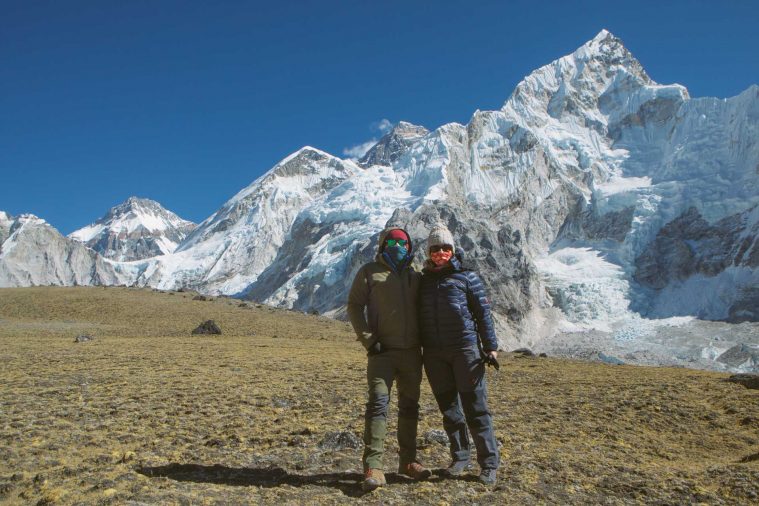
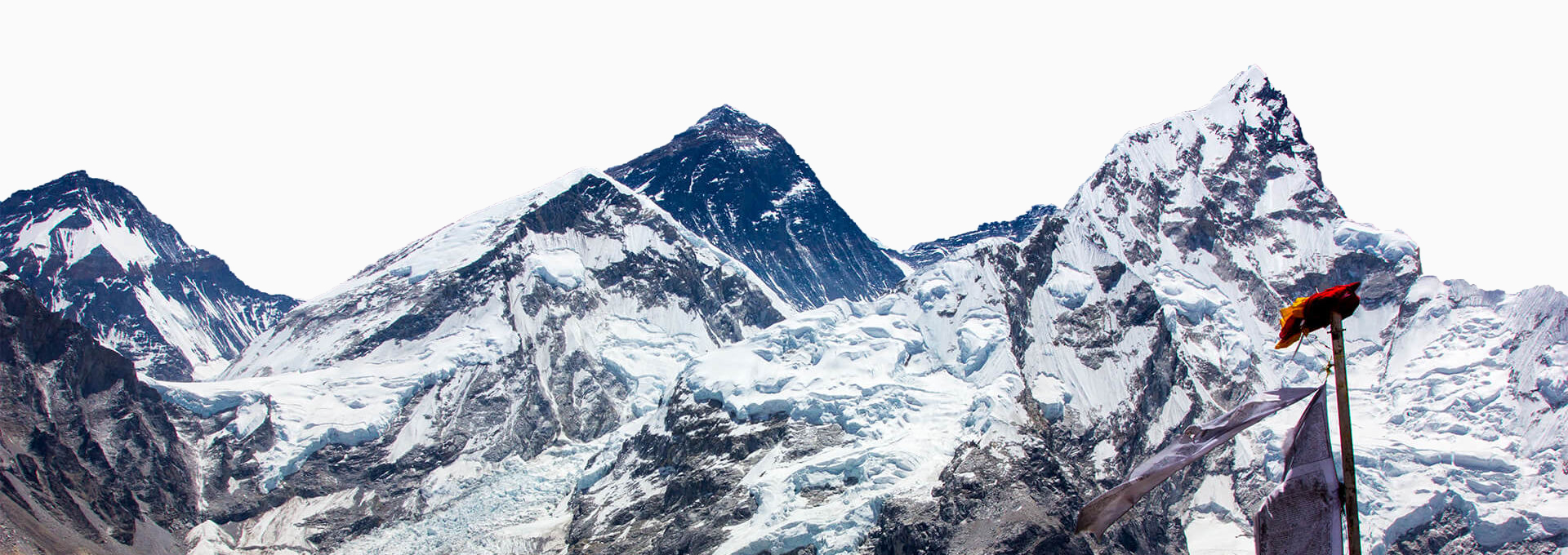
The famous Everest Base Camp Trek is 12 days. However, the Everest Region has trips ranging from half-day for the EBC Heli tour to 5-6 days for short heli treks. Then there are the treks with high passes that can be as long as up to 18 days. However, before you can calculate the total days to block off, you have to factor in your international flights, Kathmandu stay, and buffer days.
Here is how the math works out for each of the trek types in the Everest Region.
| Trip type | Trek duration | Kathmandu days before / Buffer Days | Total days in Nepal |
|---|---|---|---|
| 1-day heli tour to EBC or Kala Patthar | 1 day | 1 day / 1 to 2 days | 3 to 5 days |
| Short heli trek, sleeps below 4,000 m | 6 days | 1 day / 1 to 2 days | 8 to 9 days |
| EBC Trek with helicopter return | 10 days | 1 day / 2 to 3 days | 13 to 15 days |
| Classic EBC, walking both ways | 12 days | 1 day / 2 to 4 days | 15 to 17 days |
| High pass circuit | 16 to 18 days | 1 day / 3 to 4 days | 20 to 23 days |
Add the time it takes for your International flights and you have the total.
International flights: best practices
The flights themselves are 2 to 4 days of your total, and nothing you book changes that. However, here are three things to keep in mind before booking your tickets.
Arrive early in the day. A morning arrival leaves the day before Lukla intact for your briefing, gear check and last rentals in Thamel. An evening arrival costs you that day.
Leave after 5 pm. The end of the trip is the end that gets squeezed by Lukla weather. A late departure gives you an extra buffer day for free. A morning one means a delay eats your international ticket instead.
Confirm the return can be changed at no cost. After the buffer days are all spent, it is the ticket that will save the day.
How often does it come to that? Not often, but it is worth reading the experience Mr Badri Narayan faced in May 2022 with HoneyGuide. The only way we were able to manage what they came for was because they had adequete buffer days and flexible return tickets.
How many days do I really need in Kathmandu?
At least one full day before the trek, and often your return buffer is spent here too. The day before you fly to Lukla covers your pre-departure briefing, a gear check with your guide, and any last-minute rentals in Thamel. The days after are your cushion against what the mountains may throw at you. If all works out on schedule, Kathmandu has enough variety to keep you engaged.
How many buffer days do you need, and does the season change it?
Two to four, and yes.
| Period | Recommended buffer days |
|---|---|
| December to February | 1 to 2 |
| March to May | 2 to 3 |
| June to August | 3 to 4 |
| September to November | 2 to 3 |
Buffer covers two different problems. One is a flight that does not go. The other is a body that needs another night before it goes higher. Neither is predictable, which is the whole point of the days.
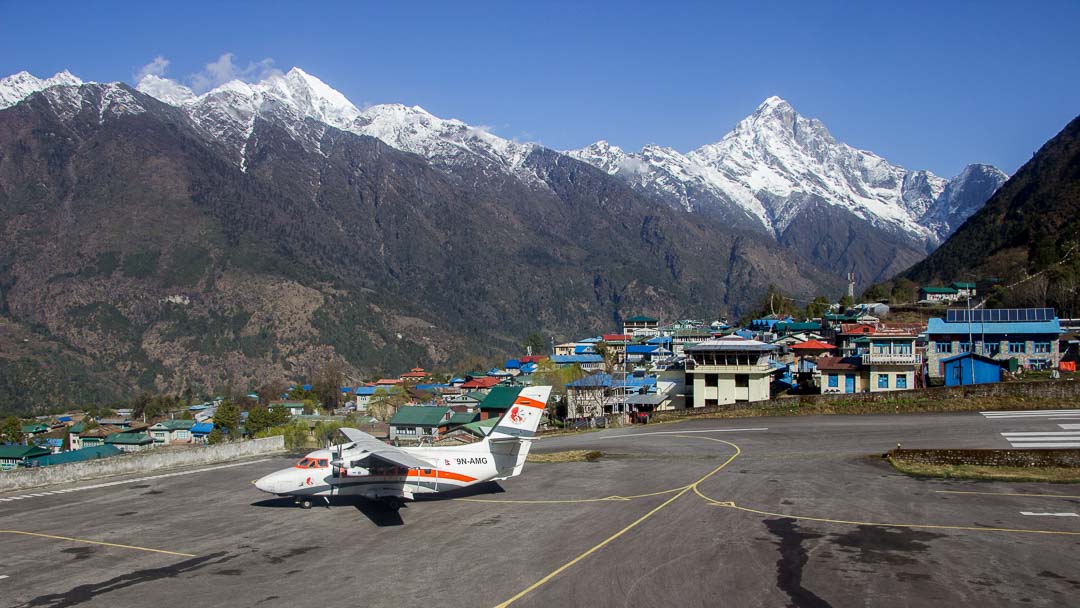
How much of the first risk you carry depends on where you fly from, which is worth settling before you book. Our guide on how to get to Lukla compares the fixed-wing, Ramechhap and helicopter routes.
Longer and higher trips need more buffer than the table suggests, because they usually add the unpredictability associated with high passes, longer days, and demanding terrain.
What is the total duration and walking distance for popular treks in the Everest Region?
Between 10 and 19 days for the walking trips, and 30 km to 170 km depending on the route and on whether you walk back.
| Trip | Duration | Total walking distance |
|---|---|---|
| Everest Three Passes Trek | 18N/19D | 170 km |
| EBC and Gokyo Lakes via Cho La Pass Trek | 14N/15D | 130 km |
| Everest Base Camp Trek | 12N/13D | 110 km |
| EBC Heli Trek | 9N/10D | 60 km |
| Hotel Everest View Heli Trek | 5N/6D | 30 km |
| Heli tour to EBC, Kala Patthar or Gokyo | 6 hours | None |
You can check out the Everest treks for more details.
Why can’t these treks be done faster, and what actually shortens them?
Because there is a limit on how fast you can raise your sleeping altitude. Above 3,000 m the Wilderness Medical Society’s 2024 guidelines set a ceiling of 500 m of sleeping gain per night, with a rest day every third or fourth day. As such, walking from Lukla at 2,860 m to Gorakshep at 5,164 m, takes eight days no matter how fast you walk.
The evidence is old and it has held. In 1976 Hackett, Rennie and Levine studied 278 unacclimatized trekkers at Pheriche, at 4,243 m on this trail, and published the results in the Lancet. Acute mountain sickness affected 53 percent of them, and incidence was higher in those who flew in, climbed fast, and spent fewer nights acclimatizing on the way up.
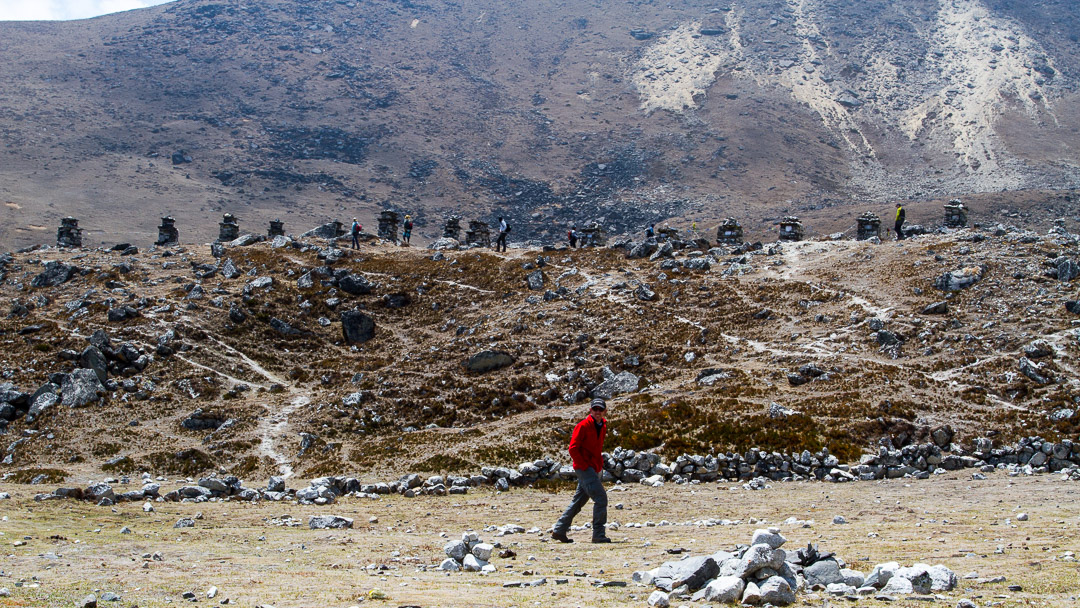
So days can come out of the descent. They cannot come out of the ascent. Here are some of the ways to shorten your trek:
| Change | What it actually does |
|---|---|
| Fly out from Gorakshep | Removes the walk-out, about 3 to 4 days, and reduces the nights spent above 4,900 m. The ascent profile is unchanged |
| Pick a lower sleeping ceiling | A short heli trek sleeps below 3,880 m, so it needs fewer acclimatization nights to begin with. For the Everest view you take a helicopter to Kala Patthar. This is the only change that removes days from the ascent safely |
A request HoneyGuide commonly receives, especially for the shorter heli treks, is whether we can fly directly to Namche or Hotel Everest View and spend the night there. The answer is a categorical no.
When the days are not there, the honest substitute is not a compressed trek. It is one of the Everest helicopter tours, which reaches Kala Patthar and is back in Kathmandu by lunch without asking your body to acclimatize at all.
Sources
- Luks AM, Beidleman BA, Freer L, et al. Wilderness Medical Society Clinical Practice Guidelines for the Prevention, Diagnosis, and Treatment of Acute Altitude Illness: 2024 Update. Wilderness & Environmental Medicine 2024;35(1 suppl):2S-19S. PMID 37833187.
- Hackett PH, Rennie D, Levine HD. The incidence, importance, and prophylaxis of acute mountain sickness. The Lancet 1976;2(7996):1149-1155. The Pheriche study of 278 trekkers on this trail, and still the clearest evidence that nights spent acclimatizing matter more than fitness.
- Independently recorded GPS tracks of the same routes, for readers who want to check the distances rather than take ours: the Three Passes trek and the Everest Base Camp trek on Wikiloc. Recorded tracks vary with route choice, side trips and GPS drift, so expect them to land near our figures rather than exactly on them.