Before we can even start talking about how to prepare for the Everest Base Camp trek, it is important to reframe the trek not as a challenge to overcome, but as a means to reset your body, brain, and breath. The goal is not to reenact the achievement rat race in a more exotic setting, but to take it as an opportunity to reconnect with yourself. Strangely, as the mountains strip you down to your breath, your steps, and your thoughts, you will find the spontaneity that cannot help but make your body more efficient, your mind calmer, and your ego more humble.
Five dimensions of preparation
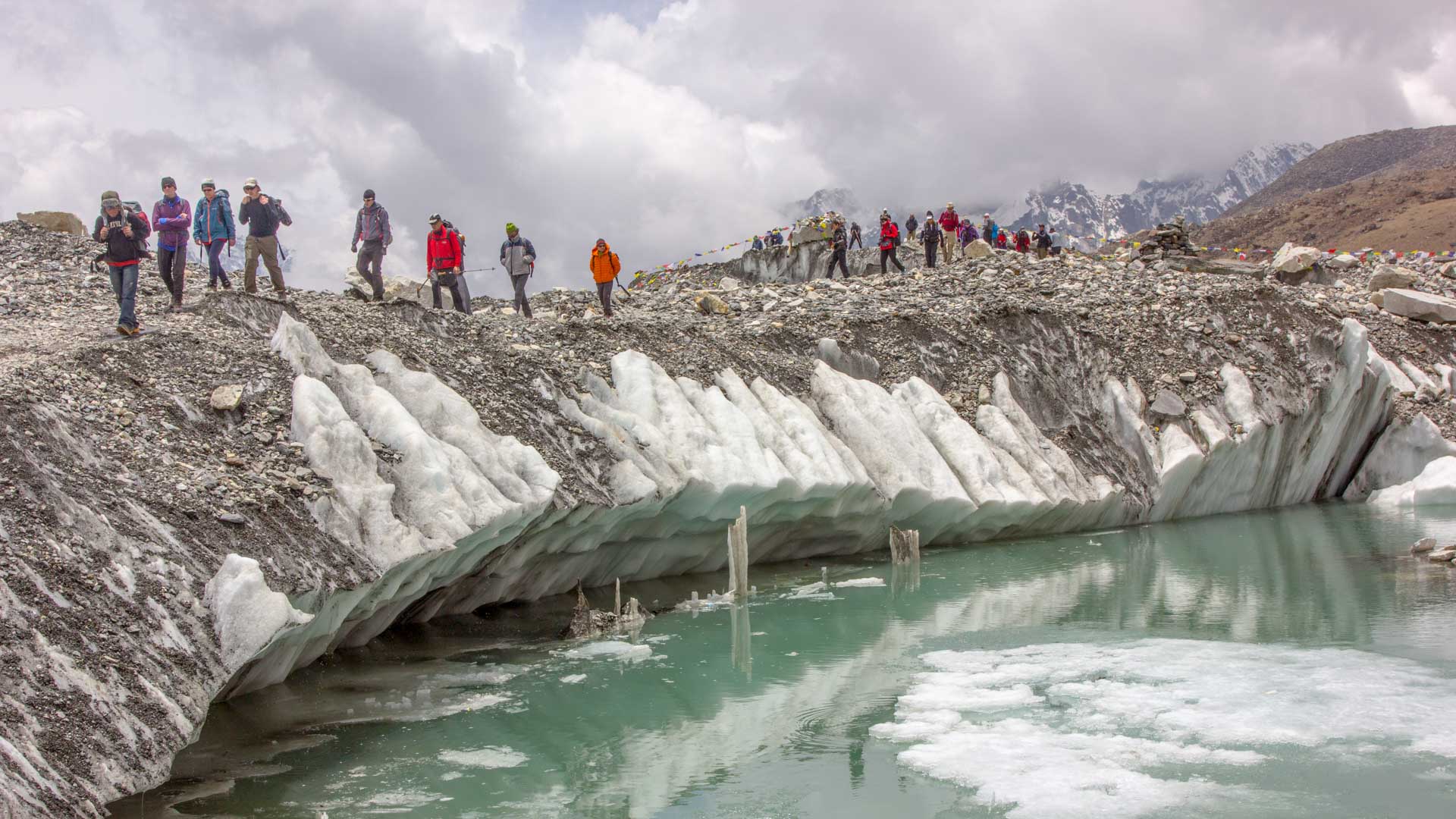 The body that does well on EBC is not necessarily the strongest body in a gym; it is the body that can keep moving economically for hours, recover overnight, stay stable on uneven terrain, and avoid making poor decisions when tired. That demands preparation across five dimensions.
Meditation
Awareness of your sensations, acceptance of adversity, and presence are the three key elements that will make or break your trek to Everest Base Camp. They will dictate how angsty you get when the trails feel treacherous, how proactively you handle AMS, and whether you find it worthwhile to stop to see the fractal in the fern. The best thing? These are skills that you can master through meditation, and these are skills that will help you long after you have posted that selfie from EBC.
We recommend that you start two to three months before the trek date and invest 15-30 minutes daily. Key practices to focus on are breath awareness (anapana) and body scanning.
It is also helpful to do practices that merge breathing and movement-based practices.
Waking up, Headspace, Medito, and UCLA Mindful are some excellent apps that can help you with meditation.
Yoga
It is not about touching your toes, but walking another six hours without pain. Yoga can help with muscle elasticity, joint range of motion, and physical recovery speed, which reduces strain and the risk of injury. Additionally, you can also incorporate some of the stretches as warm-up exercises during the trek. Here are some of the key body areas that you should focus on: ankles, hip flexors, hamstrings, glutes, calves, and thoracic spine.
A three to four-month plan with a 30-minute session per day should bring you back into shape to take on the trails. Vinyasa and Yin-style practices are most beneficial for the EBC trek.
Two apps to help you start your journey are: Find What Feels Good and Down Dog.
Corrective Exercises
Most trekking injuries are not caused by a lack of strength; they are caused by poor movement patterns breaking down under fatigue. As we age, we can sometimes develop poor movement patterns or postures that eventually become routine imbalances or even dysfunction. During high-intensity activities or fatigue, these patterns can lead to severe injuries. For example, a weak gluteus medius causes the knee to collapse inward with every step; over 130 kilometers, that becomes IT band syndrome. The first part of corrective exercise is identifying your dysfunctional movement patterns under expert guidance. The second stage is formulating an exercise plan to fix the imbalance or dysfunction. The third step is to put in the time and effort to correct it. It is extremely important that your posture is perfect for these exercises, and it is best done under expert supervision.
While corrective exercises are evidence-based and personalized, if you suspect you have a movement or postural issue in any of the following areas, it is advisable to have a consultation: knee, ankle, IT band, lower back, glutes, or calves. Common corrective exercises used to help reduce trekking-related injuries include clamshells, single-leg stands, dead bug, and bird dog. We advise a consultation at least six months before your trek date. These exercises usually add only 10 minutes to your regular workout while delivering the highest return.
Strength Training
The EBC trek demands joint strength, muscular endurance, and eccentric strength in equal measures. Your legs, back, and upper body will have to handle the stresses of repetitive movements in both uphill and downhill sections over long trekking days. As such, strengthening your quads, calves, glutes, lats, and core will reduce joint stress and make your efforts more economical.
Plan to start training at least four months before your trek, and commit to at least 30 minutes 2-3 times a week. Step-ups, split squats, slow step-downs, calf and tibialis raises, rows, lats pulldowns, pushups, and side planks are some helpful exercises that don’t need a ton of equipment. Regardless of your modality, make sure to incorporate exercises to prepare you for those endless downhills (eccentric strength) and trekking pole usage. Chase Mountains iOS/Android and Training Peaks iOS/Android are two apps that could be helpful.
Cardiovascular exercises
Even though we are mentioning these exercises at the end, this is the core fitness required for the EBC trek. Aerobic capacity, improved oxygen utilization, and efficient overnight recovery are the three most important factors for an enjoyable and safe trek. Proper cardio training can help you on all three fronts.
Think Zone 2 exercises interspersed with short high-intensity exercises on an incline/decline, ideally with a backpack. Aim to allocate 45-90 minutes for three to four days a week, with at least one long sessions in the weekend. Start three to four months before the trek date with a workout plan that progressively adds duration, incline, and pack weight, rather than intensity.
Let us bring all five dimensions of preparation into a workout plan that takes two hours at most, with a rest day on Sundays. You can, of course, change the workout plan to suit your needs. However, please make sure that your Zone 2 cardio sessions are at least 45 minutes long. If not, the mitochondrial stimulus response is negligible.
| Duration | Dimension | Activity | Purpose |
| 15 min | Meditation 7x per week |
Breath awareness (anapana), observe the natural breath without controlling it. Progress to body scan after 2–3 weeks. |
Trains presence and interoception; builds early awareness of fatigue, dehydration, and AMS signals before they become emergencies. |
| 15 min | Vinyasa Yoga 6x per week M-T-W-TR-F-SA |
Sun Salutation 3 times → Cat-Cow 8 times → Downward Dog with calf pedals. |
Raises body temperature, opens the thoracic spine, and activates the primary trekking muscles before any loading. |
| 10 min | Corrective Exercises 6x per week M-T-W-TR-F-SA |
Clamshells 15 times each side → Single-leg stand 45 sec each side → Dead bug 10 times → Bird dog × 10 each side. |
Activates glute medius, deep core, and ankle stabilizers before loading. Resets movement patterns that break down under fatigue. |
| 60 min | Zone 2 Cardio 3x per week M-W-SA |
Incline treadmill walk (8–12% grade) or outdoor hill walk with a light pack (start 3 kg and build to 8–10 kg) at a fully conversational pace. |
Builds mitochondrial density, trains fat oxidation, and develops the aerobic base for 5–7 hour trekking days. |
| 60 min | Mixed Intensity Cardio 1x per week F |
30 min Zone 2 incline walk → 4 × 5 min at brisk threshold effort on incline (stair repeats or treadmill at 12–15%) with 3 min easy walk recovery between. |
Raises lactate threshold; trains the cardiovascular response to sustained steep climbs like the Namche Hill. |
| 30 min | Strength 2× per week T-TR |
Step-ups 4 × 12 → Split squats 3 × 10 each side → Slow step-downs (eccentric) 3 × 12 → Calf + tibialis raises 3 × 15 → Dumbbell rows 3 × 12 → Lat pulldown or band pull-apart 3 × 12 → Side plank 3 × 30 sec. |
Builds quad, glute, calf, and lat endurance for climbs, descents, and trekking pole use. Eccentric step-downs specifically prepare the knees for the long descent from Kala Patthar. |
| 15 min | Yin Yoga 7x per week |
Low lunge (Anjaneyasana) → Pigeon pose → Seated forward fold → Supine twist → Malasana (yogic squat) → Legs up the wall. |
Targets the six key trekking tissues: hip flexors, IT band, hamstrings, calves, Achilles, and thoracic spine. Accelerates overnight recovery. |
| 10 min | Meditation / Pranayama 7x per week |
Nadi Shodhana (Alternate Nostril Breathing) × 5 min → 5 min open awareness sit. |
Returns the nervous system to a parasympathetic state after exertion. Directly trains the breathing regulation tool you will use before sleep at high altitude. |
Final Thoughts
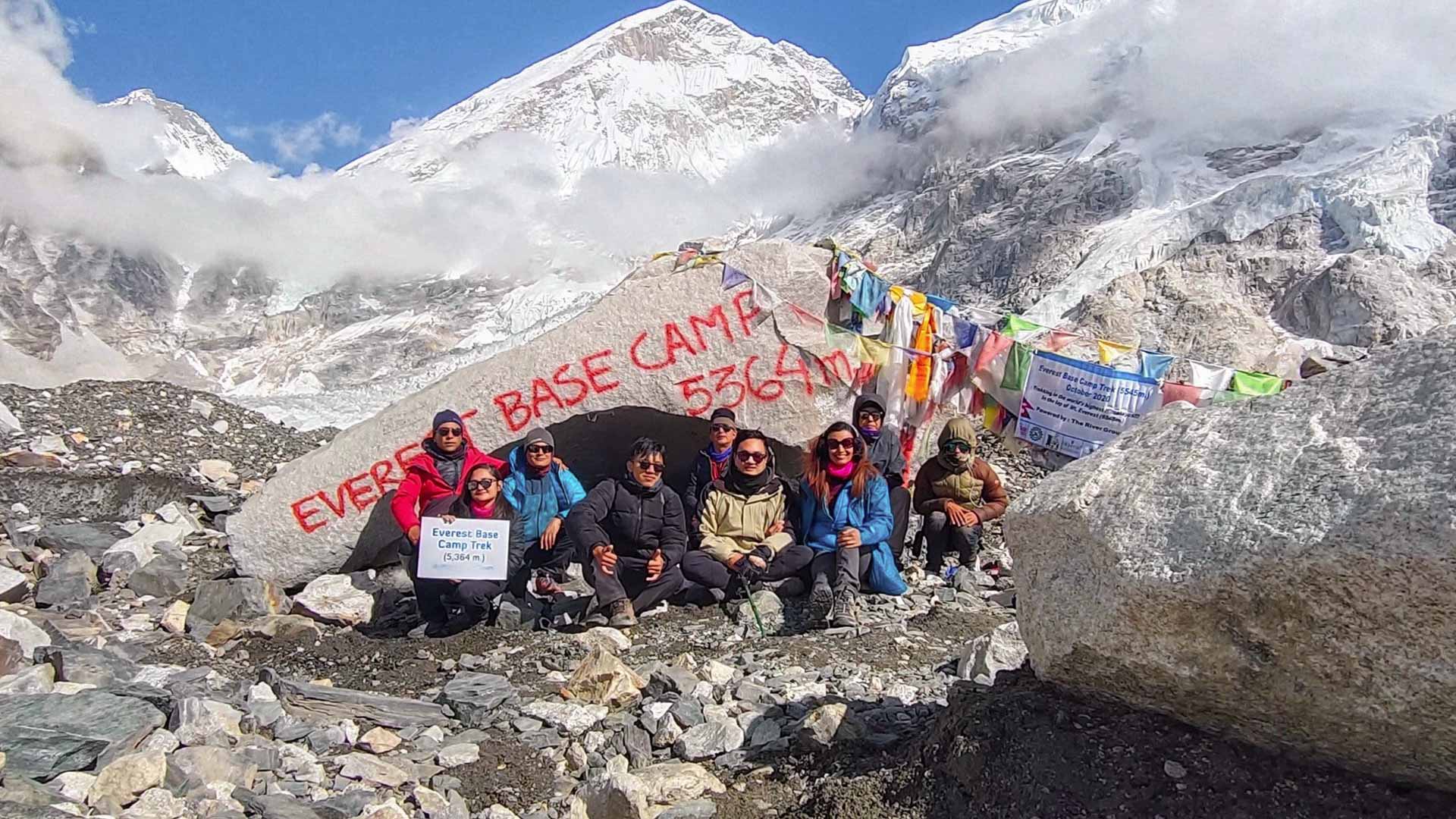 At the end, it is extremely important to mention that for the EBC trek, the altitude is the biggest challenge. And while you can prepare for it through hypoxic training, the commitment required for such training is not for everyone. It is also helpful if you stay overnight, a week before the trek, at a spot that is around 3,000 meters above sea level. But again, this might not be possible for everyone. However, everyone must understand how altitude impacts the human body and the things that can be done to help the body acclimate faster. As such, we recommend that you go through the altitude illness blog as part of the preparation required for the EBC trek.
In addition to physical preparation, there is a bunch of other preparatory work that we have talked about in other blog posts. Here is a quick summary:
Pre-existing conditions: Expert consultation and physical and medical preparation might be required for those who have medical issues with their lungs, hearts, and blood. Read our blog “Health and Safety Issues while Trekking in Nepal” for more details.
Gear: Buying or renting appropriate gear shopping is a critical part of any preparation. We have talked about it extensively in the “Everest Base Camp Trek Packing List” blog.
Buffer days: A trek to EBC, or for that matter any multi-day tour to the Everest Region, is contingent upon Lukla flights and acclimatization. Having a few buffer days gives you leg room in case things don’t go as planned.
Cultural sensitivity: Nepali people are extremely helpful but also extremely proud. As such, politeness and humor are the currency in the mountains. Be generous with it, and you will have the time of your life.
Food and Hydration: Another important part that is often forgotten is food and hydration, and we highly recommend that you go through the “Food & Drinks” blog too.
Just remember the goal here is not to be more hardcore in anything, but to become well-regulated, resilient, and adaptable. Be grateful for where you are and for all you have. When walking becomes meditation, breath becomes an anchor, and silence becomes clarity, we will understand that the EBC trek is more a pilgrimage than an adventure sport.
May your happy feet go with you!