What vaccines do you need for the Everest Base Camp trek?
While no vaccines are mandatory for the EBC trek, HoneyGuide recommends that you get the vaccines for hepatitis A, typhoid, influenza and tetanus.
HoneyGuide StaffPublished 9 min read
The Everest Region or the Nepal government does not have a mandatory list of vaccines for travelers, and nobody checks a vaccination record at the airport or on the trail. However, for personal safety HoneyGuide recommends that you get the vaccines for hepatitis A, typhoid, influenza and tetanus for the Everest Base Camp Trek.
Which vaccines do you need for the Everest Base Camp trek?#
None are required unless you arrive from a country that has yellow fever cases. Then, Nepal asks for a yellow fever certificate from travelers aged 9 months or older, including anyone who spent more than 12 hours in transit at an airport in such a country. For everyone else, the question is protection, not paperwork.
Here are the four vaccines HoneyGuide advises our travelers to be updated on before coming to Nepal.
Vaccine | Why it matters on this trip | Schedule |
|---|---|---|
Hepatitis A | Spread through food and water. The CDC names it and typhoid as the two most important pre-travel vaccines for Nepal | One dose before you fly protects most healthy adults. A second dose 6 to 12 months later makes it long-lasting |
Typhoid | Traveler risk in Nepal is among the highest in the world | One injection or a week of oral capsules, depending on where you are vaccinated |
Influenza | Flu spreads in crowded teahouses at higher elevations | This season's vaccine, before you fly |
Tetanus | Cuts, blisters and falls, days from a hospital | A booster if your last dose was more than 10 years ago |
Why do hepatitis A and typhoid matter more in Kathmandu than on the trail?#
Both spread through contaminated food and water, and the riskiest meals of your trip are in Kathmandu or Manthali, not on the trail above Namche Bazaar. Doctors at Patan Hospital have described Kathmandu as "an enteric fever capital of the world", and the CDC rates the typhoid risk for travelers to Nepal among the highest anywhere.
You can however reduce your chances of catching one by simple changes and habits that HoneyGuide have detailed in the water safety while trekking in Nepal post.
Typhoid is also getting harder to treat. The CDC notes that resistance to fluoroquinolones, the antibiotic family that includes ciprofloxacin, is high in Nepal.
Should you get flu and COVID vaccines before the trek?#
Yes. Influenza is a risk in crowded teahouses and a current flu vaccine before travel easily decreases your likelihood of catching an infection. As a matter of fact, respiratory infections are common among travelers both in Kathmandu and on trekking routes and can often lead to severe discomfort and a teahouse makes them easy to catch. You eat in one shared dining room, sleep behind thin walls possibly in sheets that are not changed as often as you would like and spend the evening around the same stove as everyone else on the trail.
Get both vaccines at home. Flu vaccine is usually available in Nepal only from October, according to CIWEC. CIWEC also reports that the updated COVID-19 vaccine is not available in Nepal. The CDC advises all travelers to Nepal to be up to date on COVID-19 vaccines.
Do you need a rabies vaccine for the Everest Base Camp trek?#
It is optional for most trekkers, and what it buys is a simpler treatment after a bite, not immunity. Any bite or scratch from a dog or monkey in Nepal still needs medical care, vaccinated or not.
The risk is real but small. A study at the CIWEC clinic counted possible rabies exposures at 1.9 per 1,000 tourists a year, and 1.2 per 1,000 among trekkers. The CDC reports that half of traveler exposures happen near Swayambhunath, the hilltop temple in Kathmandu known for its monkeys.
However, the number of stray dogs in the Everest Region has risen sharply in recent times and while there is no data on bites and scratches, the chances are as high as it has ever been. The stray dogs have also been a nuisance to the wildlife of the region as quite a few of them have gone wild and live off the land now rather than off the villages. We at HoneyGuide request travelers to not feed the dogs as this makes them likely to follow you and this is exactly how a lot of them ended up in the national park.
Treatment is readily available in Kathmandu but is limited in the Everest Region. This is where a rabies vaccine earns its place as a pre-exposure vaccine buys you time in case you do get bit.
Without the vaccine beforehand | With the vaccine beforehand | |
|---|---|---|
Before the trip | Nothing | Two doses, a week apart |
After a bite or scratch | Rabies immune globulin plus four doses of vaccine over two weeks | Two doses of vaccine, no immune globulin |
Booster | Not applicable | Only if your risk continues beyond three years (CDC) |
UKHSA suggests the vaccine for travelers going where post-exposure care is limited, for higher-risk activities and for stays of more than a month. That makes it worth considering if you are traveling with children, staying long, or trekking far from Kathmandu.
Whatever you decide, wash any bite or scratch with soap and running water for 15 minutes, then get to a clinic. For what to do about dogs on the trail before any bite happens, see environmental hazards in the Everest Region.
Which routine vaccines should you check against your record?#
MMR, chickenpox, polio and hepatitis B are checks, not decisions, and pneumococcal joins them if you are 50 or older. If your record is complete, you are done. If it is missing or uncertain, sort it out before you fly.
Vaccine | When it applies |
|---|---|
MMR | Make sure you are up to date. UKHSA advises it for all travelers to Nepal, and the CDC notes that measles cases are rising worldwide |
Chickenpox | Only if you have never had chickenpox or the vaccine |
Polio | There is no polio in Nepal (UKHSA). A booster matters only if you arrive from a country where polio still circulates |
Hepatitis B | Spread through blood and sexual contact. The CDC recommends it for unvaccinated travelers to Nepal younger than 60, and UKHSA says it could be considered for all travelers |
Pneumococcal | Recommended by the CDC for all adults from age 50 since October 2024. The current versions, PCV20 and PCV21, are not available in Nepal (CIWEC), so get it at home |
Which vaccines and pills can you skip for an Everest trek?#
Five items appear on many Nepal lists that a standard Everest Base Camp trek does not need: Japanese encephalitis vaccine, malaria tablets, and the cholera, meningococcal and yellow fever vaccines.
Vaccine or pill | Why an Everest trek does not need it |
|---|---|
Japanese encephalitis | Spread by mosquitoes in the Terai lowlands and the Kathmandu Valley, with risk peaking from May to October (UKHSA). The CDC does not routinely recommend it for trekkers headed to high altitude or for short stays in Kathmandu on the way, and reports one case ever acquired in Nepal by a foreign traveler |
Malaria tablets | UKHSA says there is no risk of malaria in Kathmandu or on typical Himalayan treks. The CDC advises tablets only for certain low-lying areas of two western provinces |
Cholera | It occurs in Nepal, but UKHSA rates the risk for most travelers as low. CIWEC suggests the oral vaccine only for volunteers in outbreak areas without clean water |
Meningococcal | CIWEC states it is not recommended for travel to Nepal. The old advice dates to a 1983 epidemic in the Kathmandu Valley, after which the CDC told hikers in Nepal to get it (MMWR, March 1985) |
Yellow fever | There is no yellow fever in Nepal. You need the certificate only if you arrive from a country with risk |
One clinic disagrees on Japanese encephalitis. CIWEC in Kathmandu takes a more cautious line and recommends it for visitors from late July to early October.
What can no vaccine protect you from?#
Four infections in Nepal have no vaccine you can get for a trek: travelers' diarrhea, hepatitis E, dengue and scrub typhus. Each is prevented by habits and kit instead.
Infection | How it spreads | Where and when | What prevents it |
|---|---|---|---|
Travelers' diarrhea | Contaminated food and water | Kathmandu and the trail. The spring risk, March to May, is double that of October and November (CDC) | Boiled or treated water, food that is hot when it reaches you, soap before meals |
Hepatitis E | Contaminated water | Endemic in Nepal | The same water and food rules |
Dengue | Aedes mosquitoes, which bite in the daytime | Kathmandu and the lowlands, from the monsoon into late October | DEET, picaridin or IR3535 repellent on exposed skin by day, long sleeves, a room with screens or air conditioning |
Scrub typhus | Chiggers, the larvae of mites that live in grass and scrub | Reported in 74 districts of Nepal in 2026 | Long trousers and sleeves, repellent, not sitting or lying on grass |
Travelers' diarrhea is the most likely illness of the trip. Ask your doctor for azithromycin to carry, which the CDC recommends for Nepal because many bacteria there resist ciprofloxacin.
The only hepatitis E vaccine is licensed in China and Pakistan (WHO). The infection is usually mild, but it can be severe in pregnancy, so pregnant travelers should talk to their doctor before booking.
Nepal reported about 18,000 dengue cases in 2019 and more than 46,000 in 2022 (CDC), and Kathmandu is among the hardest-hit districts. Autumn trekkers meet the tail of the season in the city. A dengue vaccine, Qdenga, is licensed in the UK, but UKHSA recommends it only for people who have had dengue before.
Nepal's Epidemiology and Disease Control Division counted more than 9,000 scrub typhus cases in the first nine months of 2026. It responds to doxycycline when treated early (CDC).
A fever is not something to wait out on a trek. See a doctor, and tell any doctor you see in the weeks after you get home that you have been in Nepal. The biggest risk on the trek that no vaccine touches is altitude illness, and a slow ascent is what prevents it.
When should you start your vaccines, and what if you have left it late?#
Start six to eight weeks before you fly. The vaccines with several doses set the timing. A late start is still workable.
Vaccine | Standard schedule | If you have left it late |
|---|---|---|
Hepatitis A | Two doses, 6 to 12 months apart | One dose any time before departure protects most healthy adults (CDC) |
Typhoid | One injection, at least 2 weeks before travel (CDC) | The conjugate injection at CIWEC in Kathmandu |
Hepatitis B | Three doses over six months | A rapid course at 0, 7 and 21 to 30 days, with a booster at one year |
Rabies | Two doses, a week apart | Needs at least a week before you fly |
COVID-19 and pneumococcal | One dose each | Get them at home. The updated COVID-19 vaccine and PCV20 and PCV21 are not available in Nepal (CIWEC) |
In Kathmandu, CIWEC stocks typhoid conjugate, hepatitis B, influenza, Japanese encephalitis and rabies vaccines, so an appointment on your first day is a real option.
Take your itinerary to a travel medicine clinic rather than a general practice, and describe it. You will sleep between 2,500 and 5,164 m (8,200 and 16,942 ft) in teahouses, several days' walk from a hospital, with nights in Kathmandu and possibly Mulkot at each end. A doctor who pictures Kathmandu and Chitwan will give you a different list from one the who pictures Gorakshep.
Sources#
- CDC Yellow Book, Nepal chapter, David R. Shlim: typhoid, hepatitis A, rabies, Japanese encephalitis and malaria in Nepal.
- CIWEC Hospital, Adult immunizations for Nepal, updated January 2026: what the Kathmandu clinic recommends and what is not available in Nepal.
- CIWEC Hospital, Rabies prevention in Nepal, updated January 2026: the pre-exposure course and care after a bite.
- Pandey P, Shlim DR, Cave W, Springer MFB, Journal of Travel Medicine, 2002: rabies exposure among tourists and residents in Nepal.
- UK Health Security Agency, TravelHealthPro: Nepal: vaccine recommendations and entry requirements for UK travelers.
About the author
Written by
HoneyGuide Staff
HoneyGuide is a Nepal-based trekking company. These posts are written by the guides and trip planners who work the routes they describe — mostly in the Everest region — and are updated as trails, permits and lodges change.
All posts by HoneyGuideReady to go? Compare all our Everest treks & prices
Continue planning your Everest trek
How do you avoid and handle a serious injury on the Everest Base Camp trek?
Serious injuries are rare on the Everest Base Camp trek, but when one happens, a hospital is hours away and a helicopter needs clear weather to reach you. So the job has two halves: avoid the fall in the first place, and keep an injured person stable until help can land.
Health & Safety
How do you avoid a stomach bug and stay fueled on the Everest Base Camp trek?
Boiled water, freshly cooked carb-rich food and soap go a long way toward preventing traveler's diarrhea and balancing the daily calorie count.
Health & Safety
How to prevent blisters, sunburn, Khumbu cough, and other environmental hazards in the Everest Region?
Environmental hazards are the most preventable risks on the Everest Base Camp trek, because nearly every one is answered by something you pack or a habit you keep. The ones most trekkers meet are the Khumbu cough, blisters and sunburn.
Health & Safety · Updated
Helicopter Tours in Nepal- Traveler Briefing
Knowing what to expect will help you get the most out of your helicopter tour
Gear & Preparation
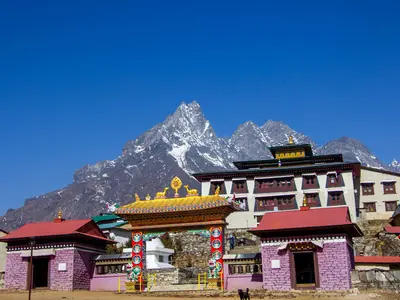
Tengboche Monastery: The holiest place in Everest
Tengboche monastery is the largest monastery in the Everest Region. If you plan to go, make sure you separate at least 1 hour to go around.
Attractions
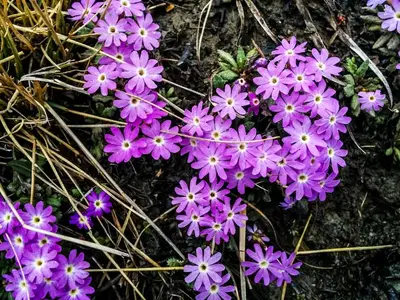
Rhododendrons and Other Flora of Mount Everest Region
In addition to stunning mountain scenery, the Everest Region also has some amazing flowers. Here are the top fifteen rhododendrons and other flowers you might see when you do the Everest Base Camp Trek. However, before we start the list, it might help you to know that the best time to visit Everest Base Camp …
Attractions