How do you avoid a stomach bug and stay fueled on the Everest Base Camp trek?
Boiled water, freshly cooked carb-rich food and soap go a long way toward preventing traveler's diarrhea and balancing the daily calorie count.
Ashish ShresthaPublished 8 min read
Boiled water, freshly cooked carb-rich food and soap go a long way toward preventing traveler's diarrhea and balancing the daily calorie count.
How likely are you to get a stomach bug on the Everest Base Camp trek?#
Likely enough to plan for. Stomach illness is the most common reason travelers in Nepal see a doctor, although altitude illness is still the more common reason for a hospital bed in the Khumbu.
At the CIWEC clinic in Kathmandu, gastrointestinal illness made up 32 percent of 24,271 traveler diagnoses from 2009 to 2017. Altitude illness made up 9 percent. The figures come from Prativa Pandey and colleagues, in Travel Medicine and Infectious Disease in 2021. Among 479 inpatients treated in the Everest region from 1996 to 2011, the order reverses: 45.5 percent had altitude illness and 10.4 percent acute gastroenteritis.
The trail survey fills the gap between the two. Of 366 trekkers interviewed on the Everest Base Camp route in 2022, 40.5 percent had at least one medical incident. About a third of those incidents were gastrointestinal, second only to acute mountain sickness (AMS).
Most cases are bacterial or viral. Among 433 travelers with diarrhea at CIWEC from 2012 to 2014, the leading causes were Campylobacter in 20 percent, norovirus in 17, enterotoxigenic E. coli in 12, rotavirus in 9 and Shigella in 8.
The exposure does not begin at Lukla. The nights in Kathmandu and Manthali before the flight carry more risk than on the actual trek.
Which foods carry the most risk on the trail and in Kathmandu?#
Anything raw, cold, or cooked and then left standing. Heat is what makes food safe here, so eat food that was hot when it reached you.
In Kathmandu and Ramechhap, skip salads, cut fruit, ice, fresh juice and lassi. You cannot see how they were washed or what water went into them.
On the trail, go easy on meat. Slaughter is not practiced in the Khumbu, so meat is carried up from below Lukla without refrigeration. The higher the village, the longer it has traveled.
Season matters too. The CDC notes that the risk of Cyclospora in Nepal is greatest in the summer and the rainy season, and a Tribhuvan University study found it on green vegetables, including basil and mint. That puts late May and September trekkers closest to the risk.
Dal bhat is the safest default on any menu. It is cooked fresh in quantity and served hot. Baked goods are safer where the bakery is busy and the stock turns over daily. The hot dishes worth ordering beyond dal bhat are covered in Sherpa food to try on the EBC trek.
Is the water on the Everest trail safe to drink, and how should you treat it?#
Not unless it has been boiled or treated. In 2016, Kirsten Nicholson and colleagues sampled 34 drinking-water sources in Sagarmatha National Park and found fecal bacteria in 26 of them (Mountain Research and Development, 2018). Contamination was higher in the lower, busier villages. Water stored in tanks or piped a long way was worse than water taken at the spring.
Boiling works at every altitude, and boiled water is available throughout the trek. Water boils at a lower temperature up high, so the CDC advises a rolling boil for 3 minutes above 2,000 m (6,562 ft), instead of 1 minute at sea level. Here is how the various ways to treat water stack up.
Method | Handles | Misses | Best use |
|---|---|---|---|
Boiling | Bacteria, viruses, Giardia, Cryptosporidium | Nothing microbial. Does not remove silt | Your main supply |
0.1-micron filter | Bacteria, Giardia, Cryptosporidium | Viruses | Paired with chlorine |
Chlorine or iodine tablets | Bacteria, viruses, Giardia | Cryptosporidium | Paired with a filter |
UV pen | Bacteria, viruses, Giardia, in clear water | Silty or cloudy water | Clear springs only |
Filter plus chlorine | All of the above | Needs contact time | Your backup to boiling |
Chlorine alone is the common mistake. The CDC says Cryptosporidium is poorly inactivated by chlorine or iodine, so tablets need a filter in front of them.
Keep one bottle that only ever holds treated water. A single refill from an untreated tap undoes everything upstream. HoneyGuide's Safety Booklet asks every traveler to carry two bottles, one of them safe for hot water, so the evening's boiled water goes straight into a clean container. The filter, tablets and bottles are all on the list of what to pack for the EBC trek.
At Gorakshep (5,164 m) the water is silty. While boiling still makes it safe to drink, we advise you to stick to bottled water here.
Does hand sanitizer protect you from stomach bugs in the Khumbu?#
Only partly. Alcohol sanitizer does not work well against norovirus or Cryptosporidium, according to the CDC, and norovirus caused 17 percent of travelers' diarrhea in the CIWEC study.
Soap and running water do better. In the finger-pad studies behind the CDC's norovirus guidelines, washing reduced the virus on hands, while alcohol sanitizer did not appreciably reduce it. Wash before every meal and after every toilet visit. Use sanitizer as the backup when there is no tap.
This matters more in a teahouse than at home. Everyone eats in one dining room, shares the same toilets and pours from the same thermos. Stomach bugs on this trail often move through a group one person at a time. Carry your own liquid or sheet soap, because a sink does not guarantee soap beside it.
How does altitude change what your body needs?#
Altitude quietly rewrites your appetite and your fluid balance at the same time, and usually in unhelpful directions. Four physiological shifts matter on the trail:
- You lose more fluid. Faster breathing in cold, dry air and increased urination in the first days at altitude both raise your daily water loss, often without the sweating that would normally warn you. A 2024 review in Frontiers in Sports and Active Living puts respiratory water loss at 4,300 m as high as 1,900 ml a day in men and 850 ml in women, with urine output up by about 500 ml.
- Your thirst is blunted. The signal that tells you to drink weakens at altitude, so you can be meaningfully dehydrated before you feel thirsty. Dehydration then mimics the early symptoms of acute mountain sickness (AMS), which muddies the picture. Drink steadily at rest stops and meals rather than waiting to feel thirsty, but do not force extra liters. The Wilderness Medical Society says overhydration does not prevent altitude illness and raises the risk of hyponatremia, a dangerous drop in blood sodium.
- Your appetite drops while your energy demand rises. Hypoxia lowers the hunger hormone ghrelin and raises leptin, which signals fullness, even as your resting metabolism climbs and you walk five to seven hours a day. The result is a slow calorie deficit that most trekkers never notice day to day. So eat by the clock, not by hunger.
- You gravitate toward carbohydrates, and that's fine. In the first days up high, most people prefer sweet, starchy food to fat and protein. Carbohydrate is also the better fuel here, because it yields more energy for each liter of oxygen than fat does.
What should you eat each day above Namche?#
Carbohydrate at every meal, and a snack in your pocket at all times. Sweet, starchy food is what most people want in their first days up high, and it is what the menus do best.
Dal bhat is the workhorse: rice, lentils and a vegetable curry, with free refills. Porridge, Tibetan bread, potatoes and noodle soup cover the other meals. Eat something every two to three hours on walking days. A bar or a handful of biscuits between teahouses keeps the deficit from building on the days appetite is lowest.
When nothing appeals, order soup. It is fluid, salt and calories in one bowl, and it is usually the one thing a queasy trekker will finish.
Protein matters less than people expect in the short term. A 2018 study of 17 men at 4,300 m found no effect of doubling protein on appetite. Eat the eggs and lentils you want, but do not let a protein target crowd out the rice.
What should you do if you get diarrhea on the trek?#
Drink oral rehydration salts first, rest if you can, and if you need an antibiotic, the drug for Nepal is azithromycin, not ciprofloxacin. For mild diarrhea, fluids and rehydration salts are the whole treatment. Loperamide can get you through a walking day. The CDC says not to use it if you have a fever or blood in your stool.
For diarrhea that stops you walking, an antibiotic shortens the illness. In the CIWEC study, 97 percent of Campylobactersamples resisted ciprofloxacin, against 8 percent for azithromycin. The authors kept azithromycin as the drug of choice "in our setting where FQs should not be used," FQs being fluoroquinolones such as ciprofloxacin. The CDC Yellow Book gives the same advice for South Asia.
Giardia needs a different drug. The CDC lists tinidazole, taken as a single dose, among the first-line treatments. Get both prescriptions, and the doses, from your own doctor before you fly. On HoneyGuide treks the lead guide carries azithromycin, tinidazole and loperamide in a field kit inventoried at the start of every trek, so a traveler who falls ill above Namche is not waiting for a pharmacy. The kit holds one course of each for the whole group, which is why your own prescription still matters.
See a doctor if you have a fever, blood in your stool, or vomiting that stops you keeping fluids down. On the trail, that means Khunde Hospital near Khumjung, or the Himalayan Rescue Association aid post at Pheriche in the trekking seasons.
Sources#
- Pandey P, Bodhidatta L, et al. Traveler's diarrhea in Nepal: changes in etiology and antimicrobial resistance. Journal of Travel Medicine 2019;26(8):taz054. The pathogen mix and the ciprofloxacin resistance behind sections 1 and 7.
- Pandey P, Lee K, Amatya B, et al. Health problems in travellers to Nepal visiting CIWEC clinic in Kathmandu: a GeoSentinel analysis. Travel Medicine and Infectious Disease 2021;40:101999. Nine years of traveler diagnoses from Nepal's main travel clinic.
- Nicholson KN, Neumann K, Dowling C, et al. An Assessment of Drinking Water Sources in Sagarmatha National Park (Mt Everest Region), Nepal. Mountain Research and Development 2018;38(4):353-363. The Khumbu water sampling in section 3.
- CDC Yellow Book. Travelers' Diarrhea. Treatment guidance, including why South Asia calls for azithromycin. Worth reading with your doctor before you travel.
- Karl JP, Cole RE, Berryman CE, et al. Appetite suppression and altered food preferences coincide with changes in appetite-mediating hormones during energy deficit at high altitude. High Altitude Medicine & Biology2018;19(2):156-169. What happens to appetite in the first days at a new altitude.
About the author
Written by
Ashish Shrestha
Founder at HoneyGuide
Born in Kathmandu, Ashish studied neuroscience at the University of Pennsylvania before returning to the mountains he grew up with. An avid trekker and a birder, he has been working the Khumbu since 2015, just long enough that when he recommends a guide or a lodge, he is choosing from people he knows.
All posts by AshishReady to go? Compare all our Everest treks & prices
Continue planning your Everest trek
How to prevent blisters, sunburn, Khumbu cough, and other environmental hazards in the Everest Region?
Environmental hazards are the most preventable risks on the Everest Base Camp trek, because nearly every one is answered by something you pack or a habit you keep. The ones most trekkers meet are the Khumbu cough, blisters and sunburn.
Health & Safety · Updated
How do you use a pulse oximeter on the Everest Base Camp trek?
Clip it on a warm finger after five minutes sitting still, read it before breakfast and before dinner from Kathmandu onward, and compare each reading with your own last few days.
Health & Safety · Updated
Travel Insurance for Everest Base Camp Trek [Updated: March 2026]
Planning the Everest Base Camp trek means preparing for more than just the trail. Understanding how travel insurance and evacuations work in the Everest region is an important part of trekking responsibly. Knowing what to expect, from medical support in the mountains to helicopter evacuations and insurance procedures, can help you make better decisions before …
Health & Safety
Helicopter Tours in Nepal- Traveler Briefing
Knowing what to expect will help you get the most out of your helicopter tour
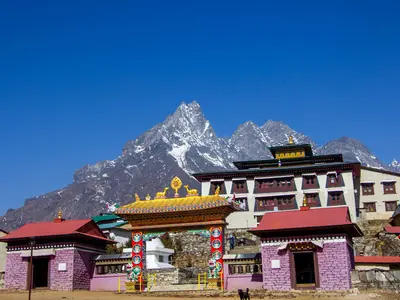
Tengboche Monastery: The holiest place in Everest
Tengboche monastery is the largest monastery in the Everest Region. If you plan to go, make sure you separate at least 1 hour to go around.
Attractions
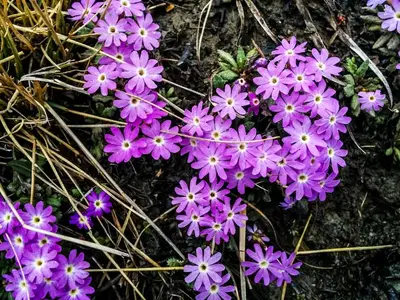
Rhododendrons and Other Flora of Mount Everest Region
In addition to stunning mountain scenery, the Everest Region also has some amazing flowers. Here are the top fifteen rhododendrons and other flowers you might see when you do the Everest Base Camp Trek. However, before we start the list, it might help you to know that the best time to visit Everest Base Camp …
Attractions