







Wildlife & Flora
Himalayan Giant Honeybee
Himalayan Giant Honeybee (Apis laboriosa) is a wildlife & flora sighting recorded around Chhomrong, Landruk, Tilche.
- Scientific name
- Apis laboriosa
- Category
- Wildlife & Flora
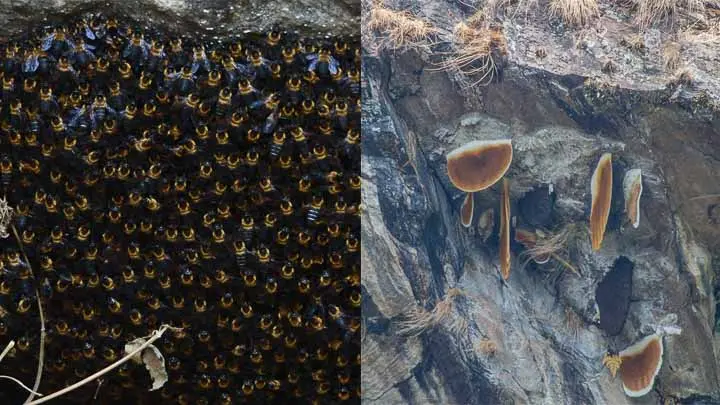
These guys are named Himalayan 'Giant' Honeybee for a reason. They are the world's largest honeybee. A single adult can measure up to 3 cm in length. The make their nests high up in the himalayas under vertical cliffs. Due to their peculiar nesting behaviours they are referred to as Himalayan cliff honeybee. In Nepali, Bhir Mauri, which translates to cliff bee. Since they nest high up in the cliffs, during winter they migrate to lower altitudes and nest under the rocks. You can make out if the bees are present in the hive by figuring out it's colour. Black beehives mean bees are present in the hive and yellow/ golden colour means that the bees are absent. The big size of the bees are not just for show off; they produce large amount of honey in their nests. One nest can contain as much as 60 kgs of honey and these honey are not just any other ordinary honey. They are called red honey and are quite expensive. The wholesale rates of these honey are upto 5 times more expensive than the price of regular honey. A word of advice before you decide to taste it, they are very intoxicating and may result in loss of motor coordination if consumed in amount more than one can handle. Also, try and stay away from their stings as it could be life threatening and could cause heart attacks and intestinal problems. Avoiding sudden, jerky movements should be a start. These giant bees have also been featured in a famous book by Eric Valli, "Honey Hunters of Nepal" which is about those brave souls collecting honey in the high cliffs of Nepal.